Case Study
OurFit
- UI/UX Design
- Vibecoding
- Branding
- Strategy
- Art Direction
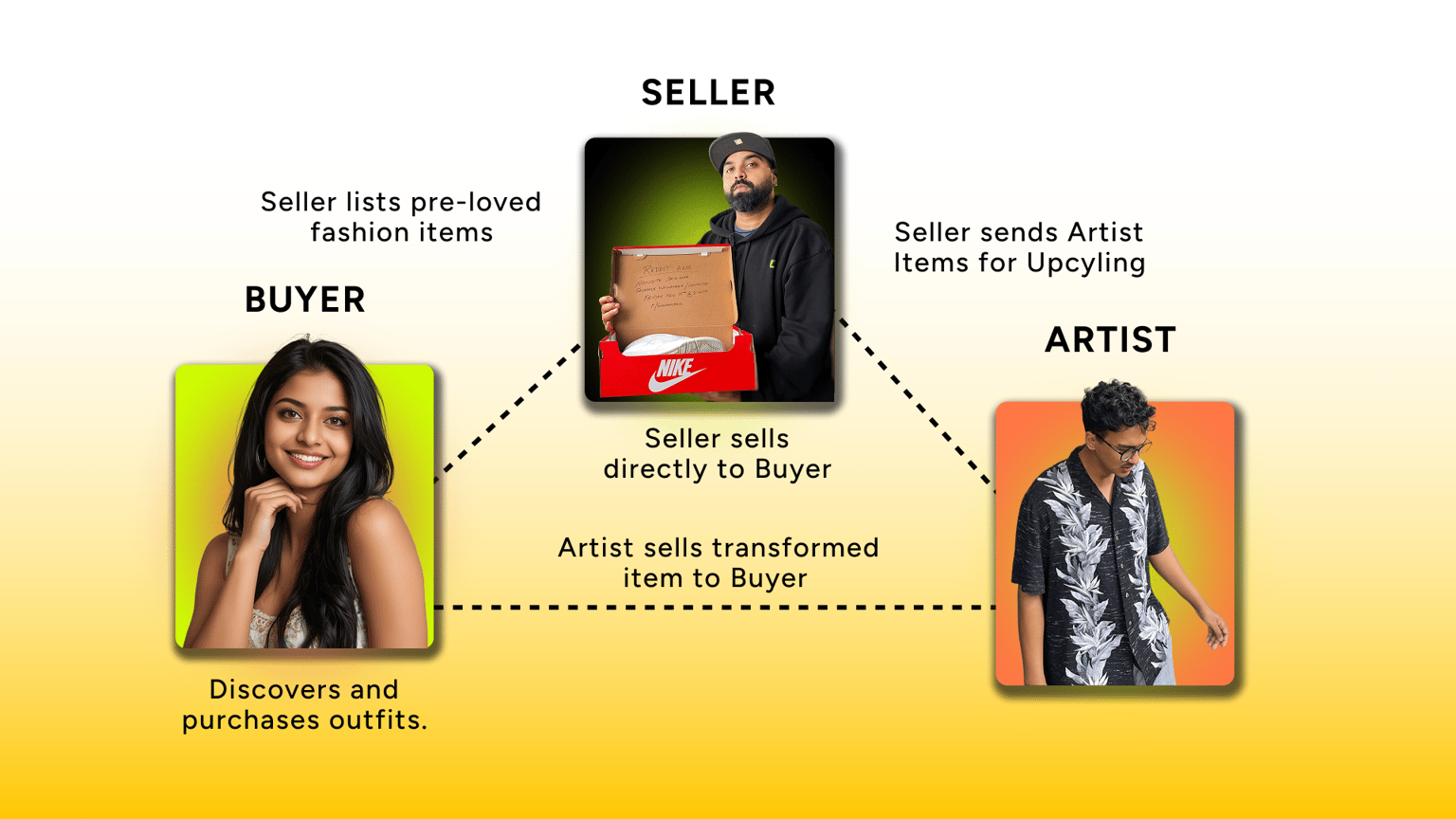
OurFit is a concept app I made for people who buy clothes, get bored of them, and then let them sit in a bag under the bed for a year. Which is most of us. It's a marketplace with three sides instead of the usual two: people offloading stuff they're done with, artists who rework clothes, and buyers who want something that isn't already in everyone else's wardrobe.
India has got very good at making fast fashion and very bad at doing anything with it afterwards. There are resale apps here, but none of them are a place a 19-year-old actually wants to spend time, and none of them have any room for the person who can fix a garment instead of just flipping it.
Took me about two months. I drew all of it by hand in Figma and then built and deployed it with Claude Code. The app is live, and it's running further down this page if you want to skip ahead and mess with it.
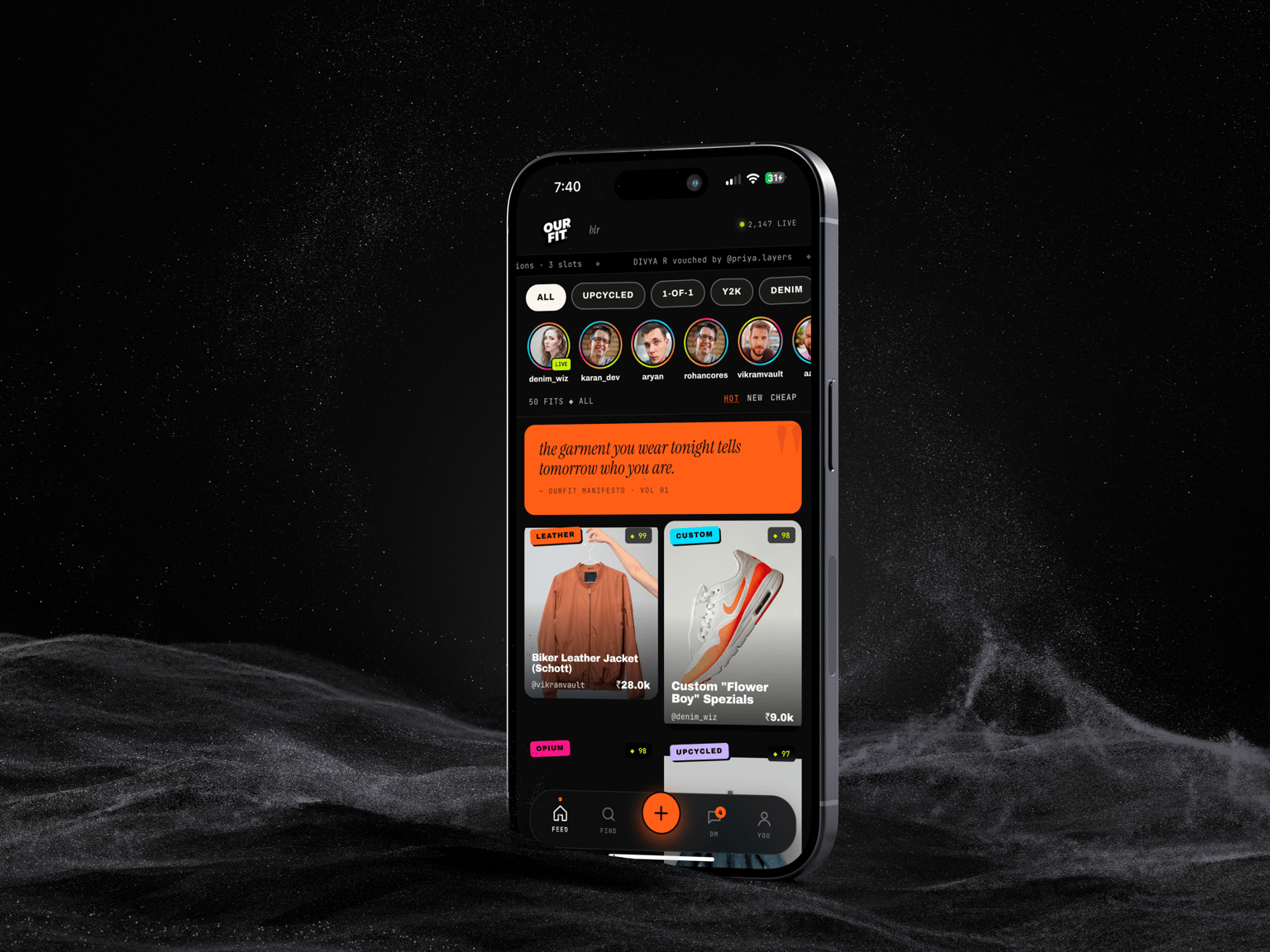
The live app can't be embedded in this browser.
Open ourFIT in a new tab ↗
Live · ourfitfinal.vercel.app
Try it yourself
You can actually use it
What's behind the glass is the deployed build, not a video and not a clickable Figma file. Same code, same dummy inventory, same haggle. Go through it the way a user would.
- It opens on a four-slide intro. Hit SKIP to land straight on the feed.
- The feed, filters, listing pages, creator profiles, the haggle chat and the upload flow are all wired up.
- It's a PWA, so if you open it full screen on your phone it installs to the home screen.
“The garment you wear tonight tells tomorrow who you are.”
ourFIT Manifesto · Vol 01
The problem 01
Why resale here doesn't work yet
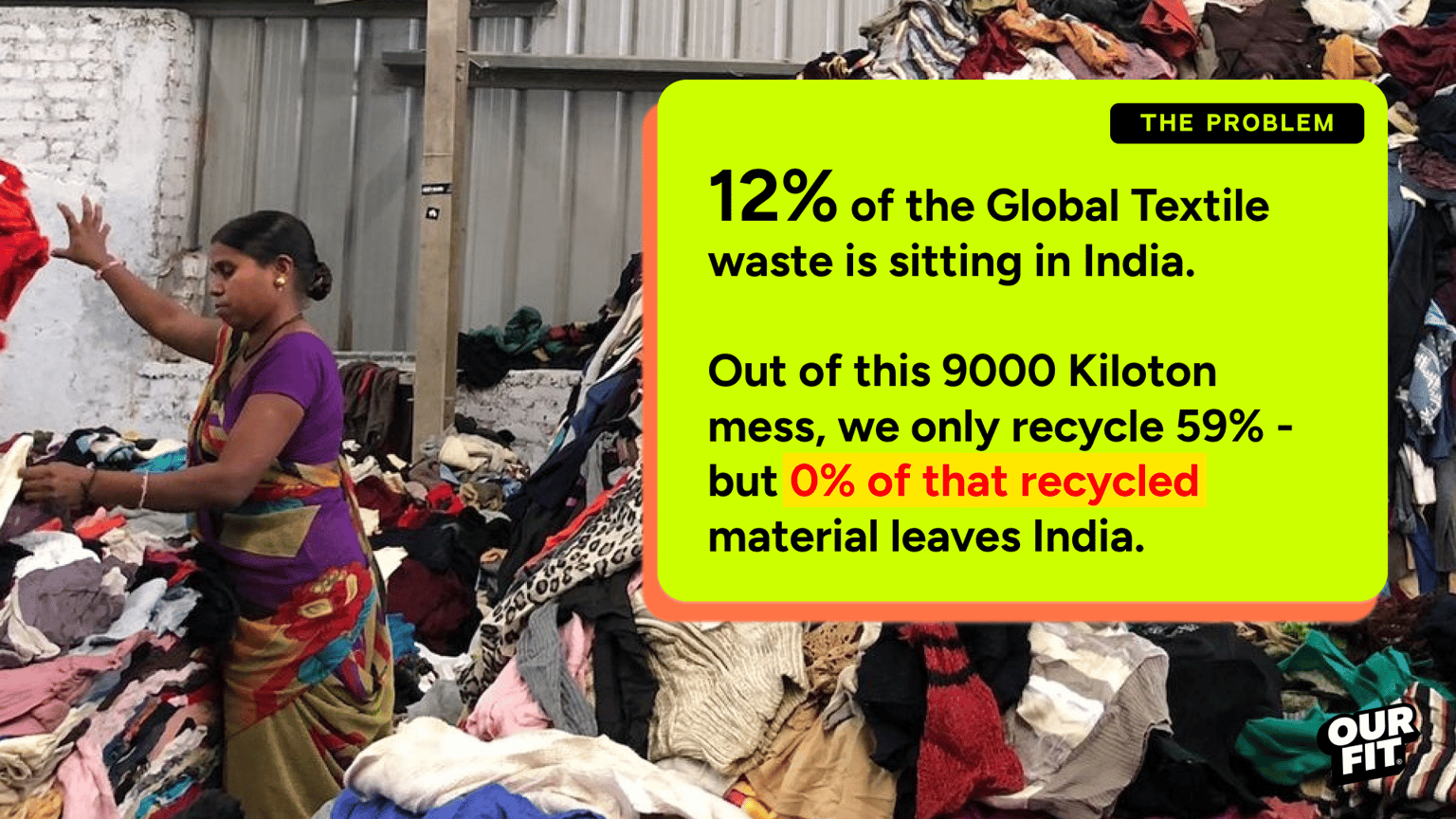
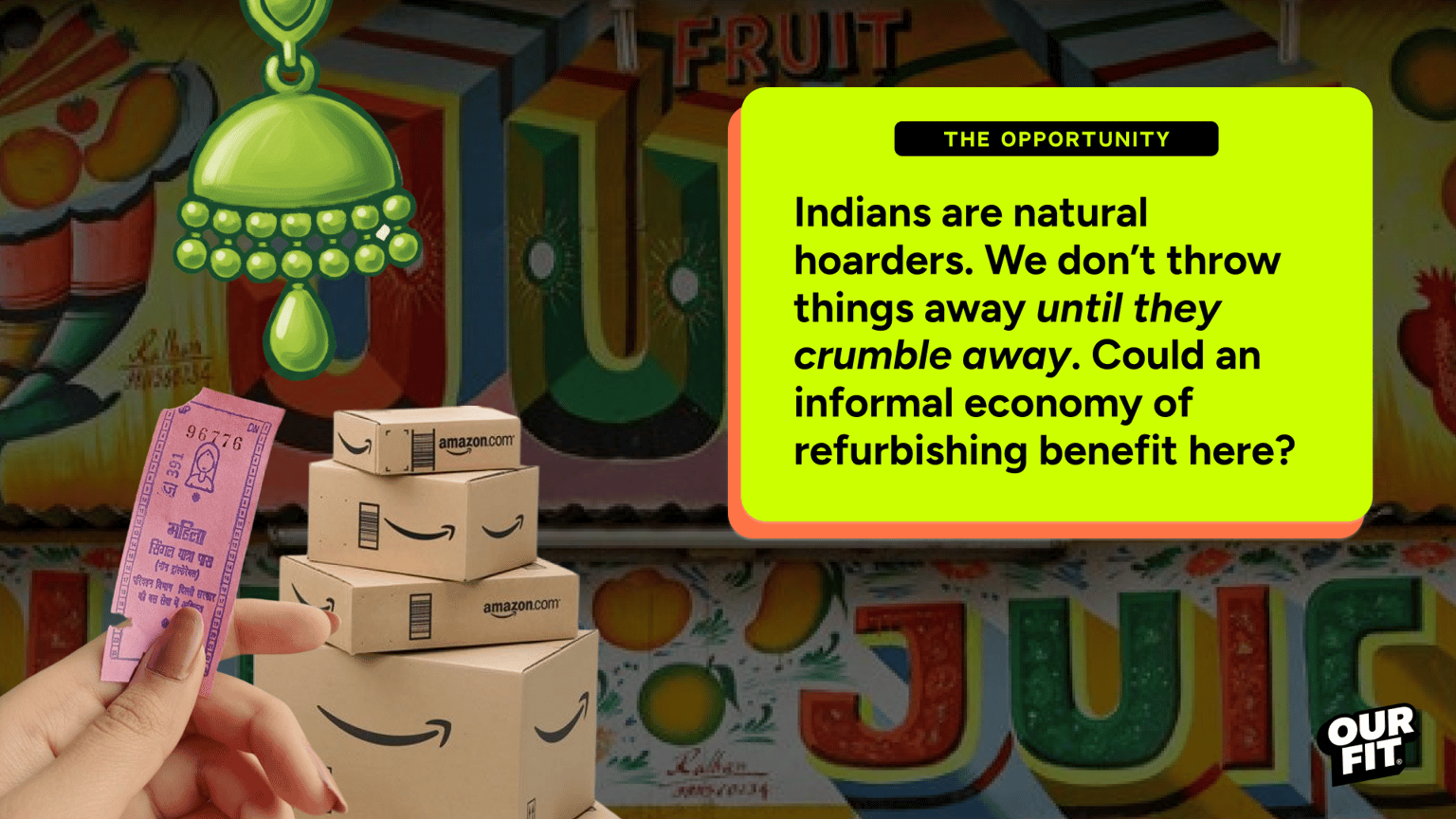
We throw away a huge amount of clothing and then keep basically all of it inside the country. Meanwhile the people who'd happily buy second-hand are stuck on apps where a stranger offers you a fifth of your asking price within an hour, and there is nowhere at all to send a garment that's half dead but not finished.
12%
of the world's textile waste is sitting in India. That's roughly 9,000 kilotons.
59%
of it gets recycled, and none of that recycled material leaves the country.
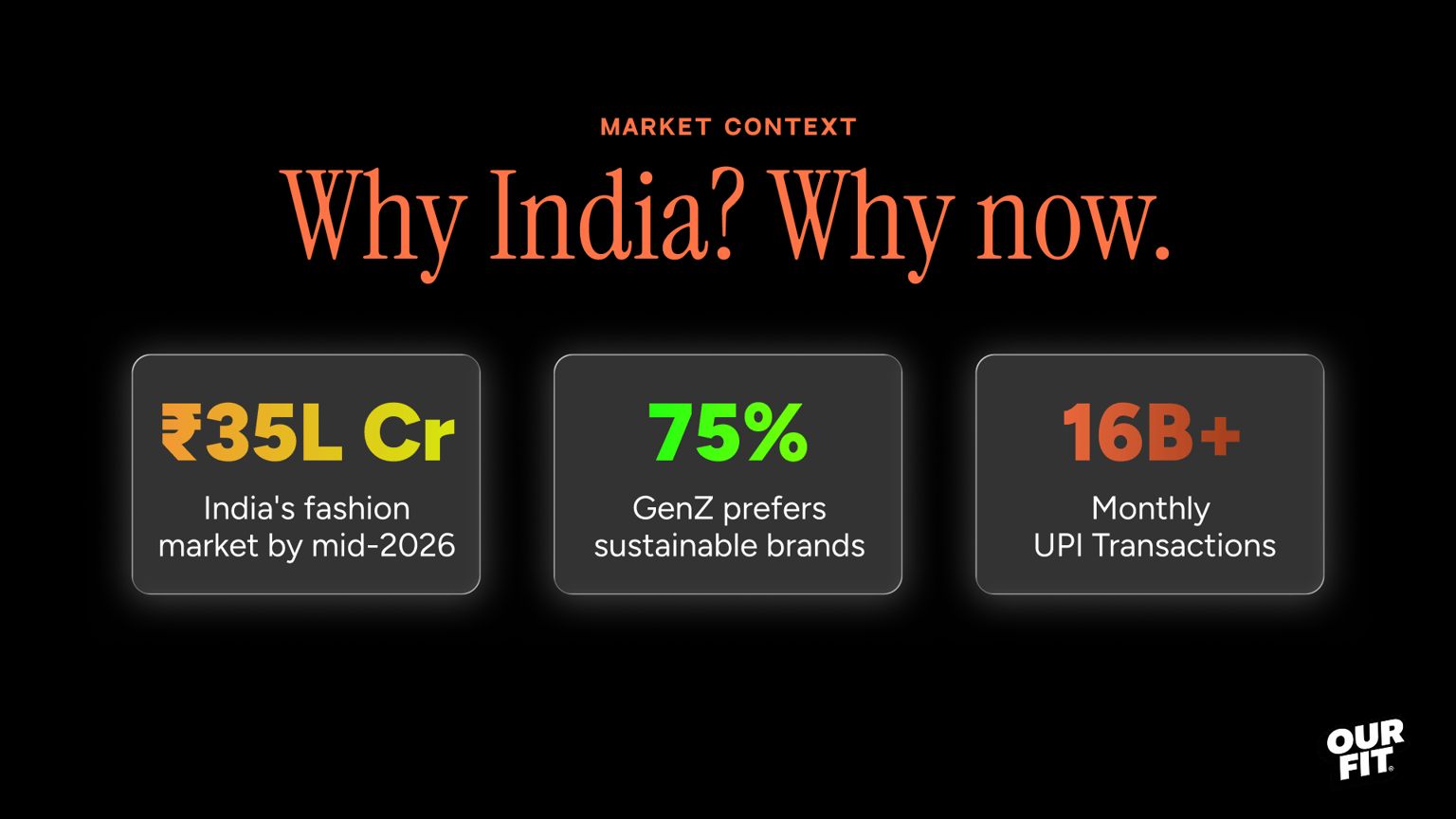
₹35L Cr
what India's fashion market is projected to be worth by mid-2026.
0
apps that connect upcycling artists to thrifters. That's the gap I went after.
Who it's for 02
Who I was designing for
Most resale apps are built for two people, a seller and a buyer, and then everyone wonders why nothing moves. I started from a third one instead: the person who can take a piece nobody wants and make it worth wanting.
Being straight about this: it's a concept project. The three people below are made up. They're built out of desk research and conversations with friends who thrift, not a formal study I ran, and the quotes are written rather than transcribed.
The Seller
Ananya, 22
Half her wardrobe is stuff she loved for exactly one season. She put a ₹4,000 jacket on a resale app, got offered ₹600 within the hour, and never opened it again. The jacket is still in a bag under her bed.
Needs: a price that isn't insulting, and some sign the buyer will actually wear it.
The Artist
Karan, 26
Reworks denim and sells it out of his Instagram DMs. Every commission is a mess: reference screenshots in one thread, measurements in another, payment over UPI, and no record anywhere of who owned the piece first.
Needs: the garment, the design proposal and the money in one place.
The Buyer
Meher, 19
Would rather wear something with a history than something 400 other people also bought. Scrolls thrift pages for hours and buys almost nothing, because she can't tell a real archive piece from a reseller flipping mall stock at a markup.
Needs: a reason to trust a stranger, and something that's genuinely one of one.
“If I wanted to be low-balled, I'd go to a flea market. At least there I get to argue about it in person.”
Written, seller side
“Every flip I've done started in someone's DMs and ended in a screenshot of a UPI payment.”
Written, artist side
How it works 03
How a piece moves through it
The Flip is the bit everything else is built around. A garment comes in as something dead and goes out as a one-off, and every person who touched it on the way stays attached to it.
01
The Seller lists it
A dead piece goes up in under two minutes. The archive imagery gets AI-enhanced so the listing looks like an editorial page rather than a garage sale, which is honestly where most low-balling starts.
02
The Artist flips it
Upcyclers nearby send a design and a price against that listing. The Thrifty Flip flow keeps the original garment tied to the artist's proposal, so the finished piece ends up carrying both names.
03
The Buyer cops it
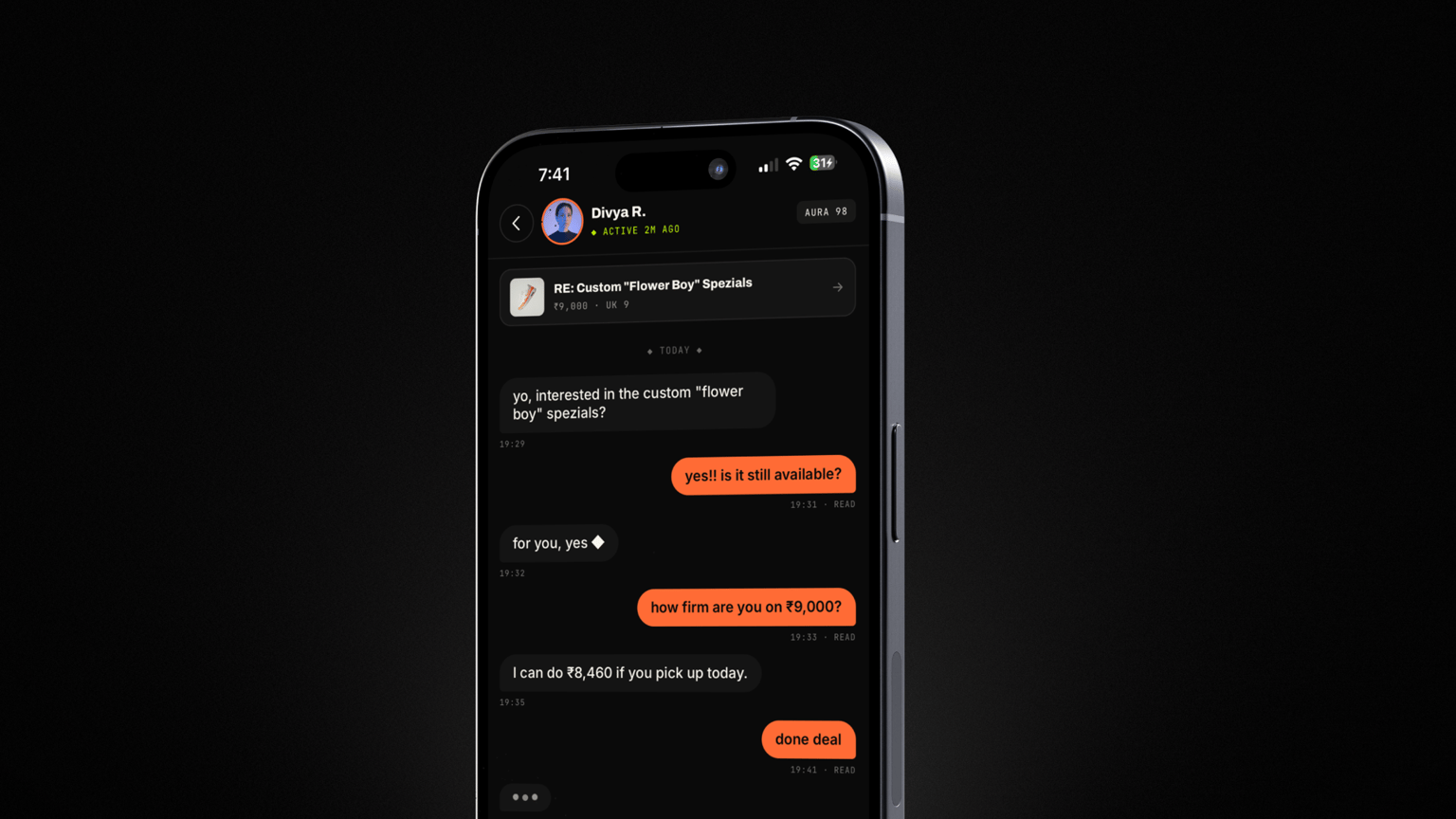
Bargaining happens through transactional chat cards: accept, decline, counter. A clean deal ends in a Vouch and both people's Aura goes up. Trust does the work a star rating usually pretends to do.
The journey 04
From under the bed to someone else's feed
One piece, all the way through, and what the person holding it is feeling at each step. That feeling line is what I actually designed against: it starts at guilt and it should end at proof.
Also illustrative. I mapped this from the concept, not from tracked sessions with real users.
01
Dead weight
A good jacket has been in a bag for a year. Too nice to bin, too boring to wear.
Guilt02
Listed
Shot, enhanced, posted in a few minutes. It finally looks like the thing she paid for.
Hope03
An artist bites
A proposal turns up. Cropped, patch-worked, repriced. Somebody saw a second life in it.
Curiosity04
The haggle
Offer, counter, counter again, but as cards instead of an argument in a chat window.
The fun part05
Vouched
The deal closes clean. Both sides vouch, both Auras go up, and next time is easier.
Trust06
Worn out loud
The piece turns up on the feed on somebody else. That's the loop closing.
Proof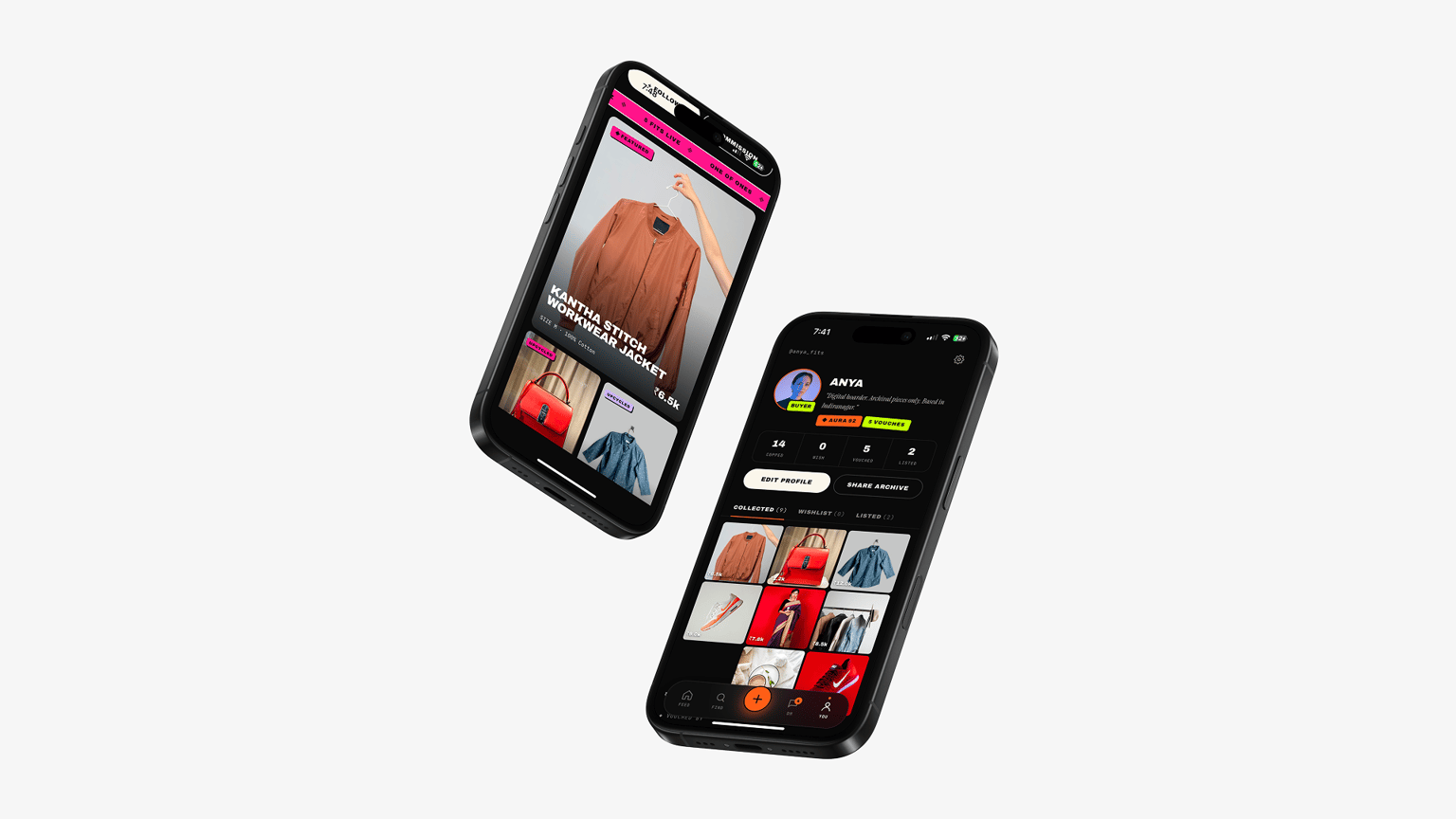
How I worked 05
What the two months actually looked like
I'm not good at designing quietly and doing a big reveal at the end. I showed every stage to someone who'd plausibly use the thing, and anything I had to explain in a paragraph got rebuilt until I didn't have to.
Week 01 — 02
Arguing about it before opening Figma
I wrote the thesis down first. India has the fast fashion and it has the culture, it just has no refurbishment ecosystem anyone would want to use. Then I pitched the one-line version to people who actually thrift. If I needed a paragraph, it wasn't ready. The three-way idea survived that; the two-sided version I started with didn't.
Week 03
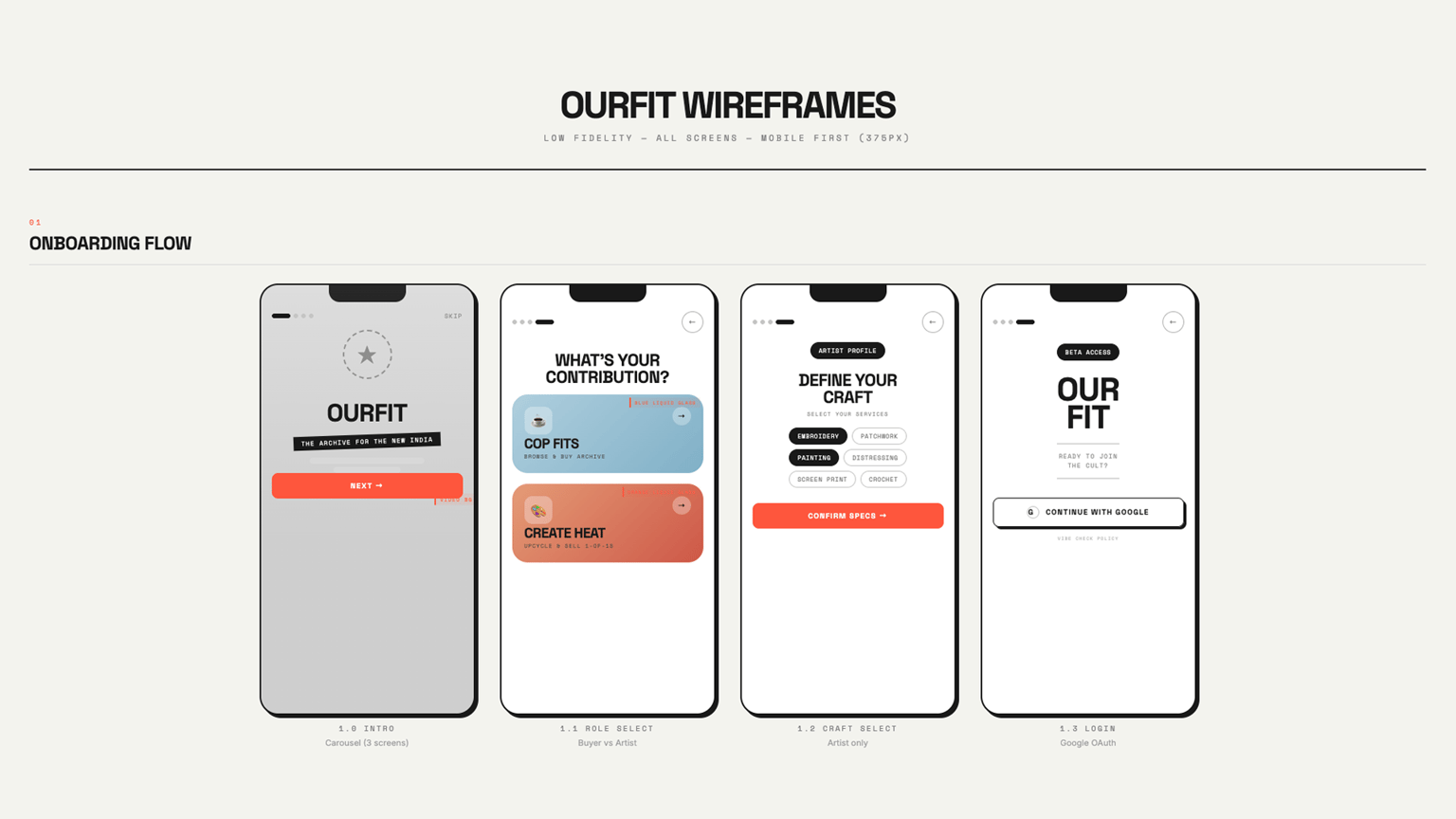
Wireframes, then everything by hand
Low fidelity first, all screens, mobile only. No UI kit and no template after that. I drew every screen from scratch so the interface would carry the brand rather than just wear it. Colour, type, radius and the sticker language were locked before I had a second screen, which is the only reason the build stayed consistent two months later.
Week 04
First round of feedback, which stung
I put the flow in front of a few sellers and one upcycler who does this for a living. They told me it read like a normal thrift app and that they hadn't noticed the artist at all. So the three roles became the first thing you pick in onboarding. The flip had to be the premise, not a feature sitting two levels down where nobody would find it.
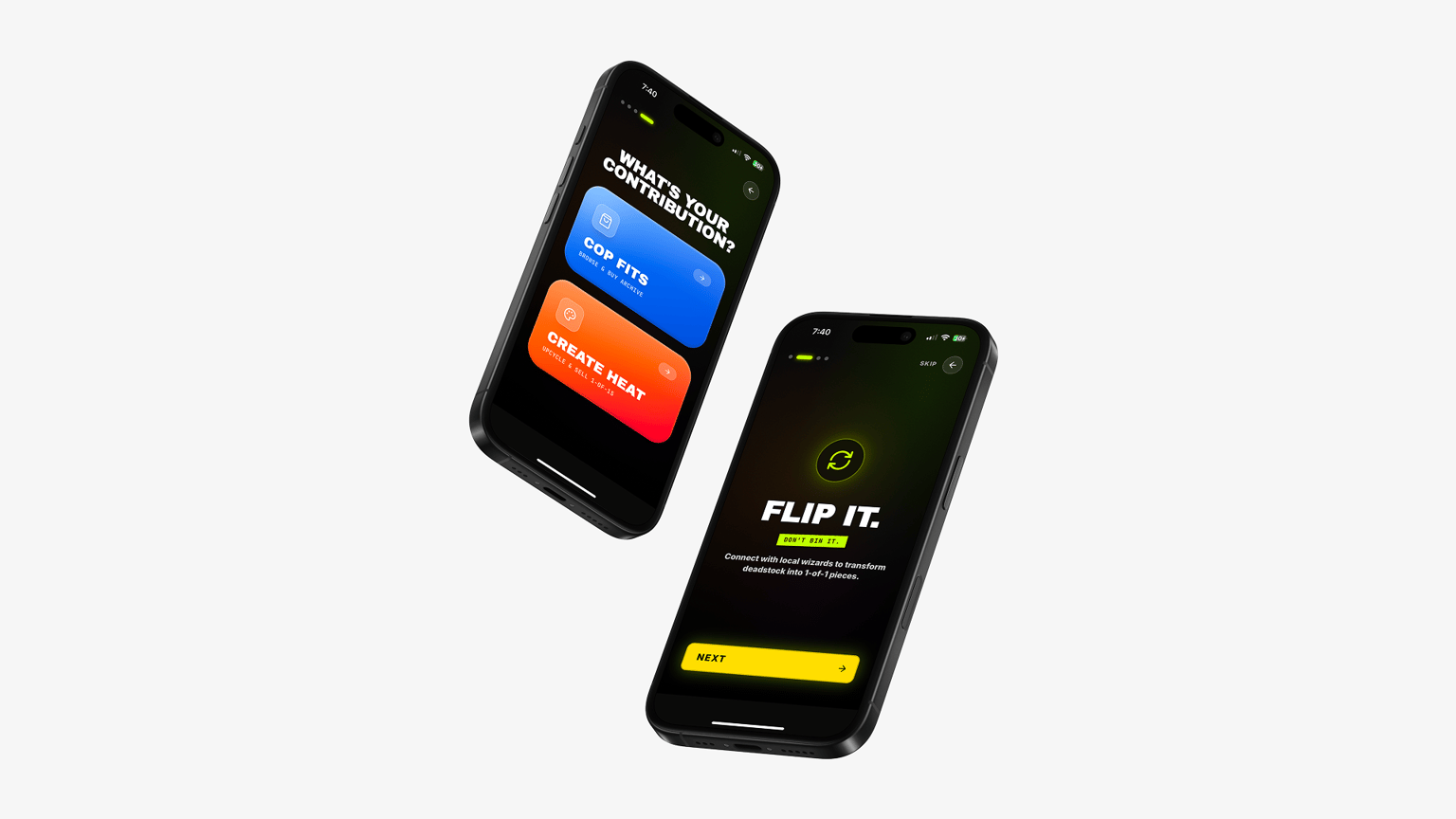
Week 05 — 06
Figma into Claude Code
I handed the design system over and built the PWA against it. This is where vibecoding pays off and also where it catches you out: if you can't say a rule in one sentence you can't hand it to a machine, so every place my spacing and type scale were slightly improvised showed up on the first pass. The tokens in the build are the tokens from the file.
Week 07
Second round, and nobody wanted to haggle
Everyone went quiet at the bargaining step. Typing “would you take 2k?” to a stranger felt rude in a way it never does in an actual shop. So I turned the haggle into chat cards: offer, counter, accept, decline, all as buttons. Now it reads like a game with rules, which is much closer to how bargaining works in person anyway.
Week 08
Shipping it, and cutting a lot
Deployed to Vercel as an installable PWA. I cut payments, logistics and AR try-on on purpose. None of them prove the idea, and a working three-way loop with dummy inventory says more than a checkout I only half built. What's live is the argument. The rest is roadmap.
In hindsight
What I'd do differently
I'd go find the upcyclers first. They're the scarce side of this marketplace and by far the hardest to design for, and I spent three weeks designing for the two roles I already understood because that was easier. The onboarding fix in week four was really just me paying for that.
The system 06
The system behind it
Brutalist and editorial. Black ground, one hot colour for actions, and a set of acid accents where each one means exactly one thing. Nothing here is coloured for decoration. Green is a vouch. Orange is something you can tap. If I couldn't say what a colour meant, it didn't get in.
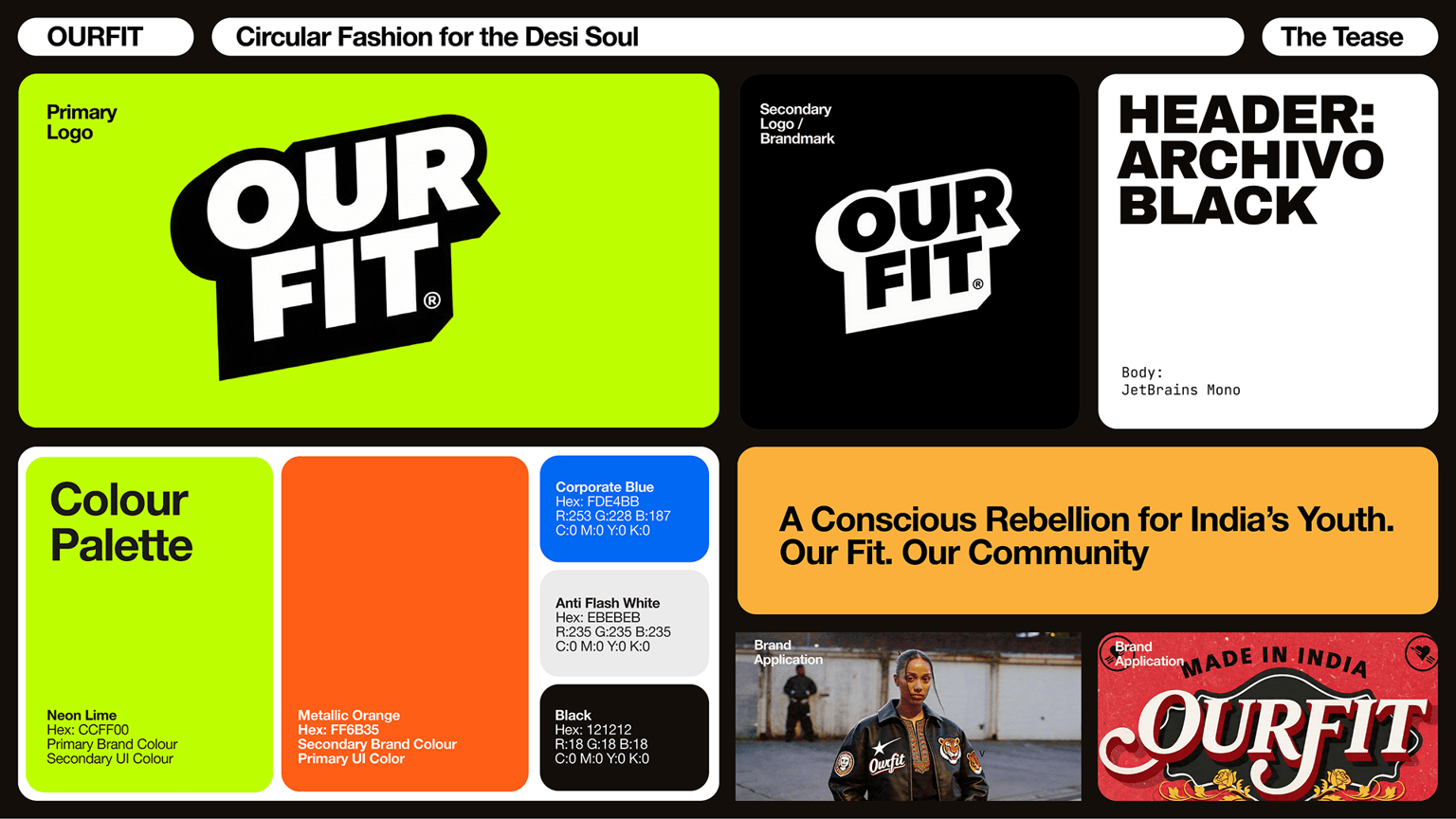
Flip it.
Archivo Black Headlines and sticker type. Set tight, set huge, never apologetic.
The anti-fast fashion ecosystem.
Space Grotesk Product names, buttons, everything you tap.
the garment you wear tonight
Instrument Serif The manifesto voice. Used sparingly, italic, only when the app is talking about itself.
2,147 LIVE ◆ 50 FITS ◆ ₹18.0k
JetBrains Mono Counters, prices, tags. Anything that should read as data.
Where it stands 07
Where it's at right now
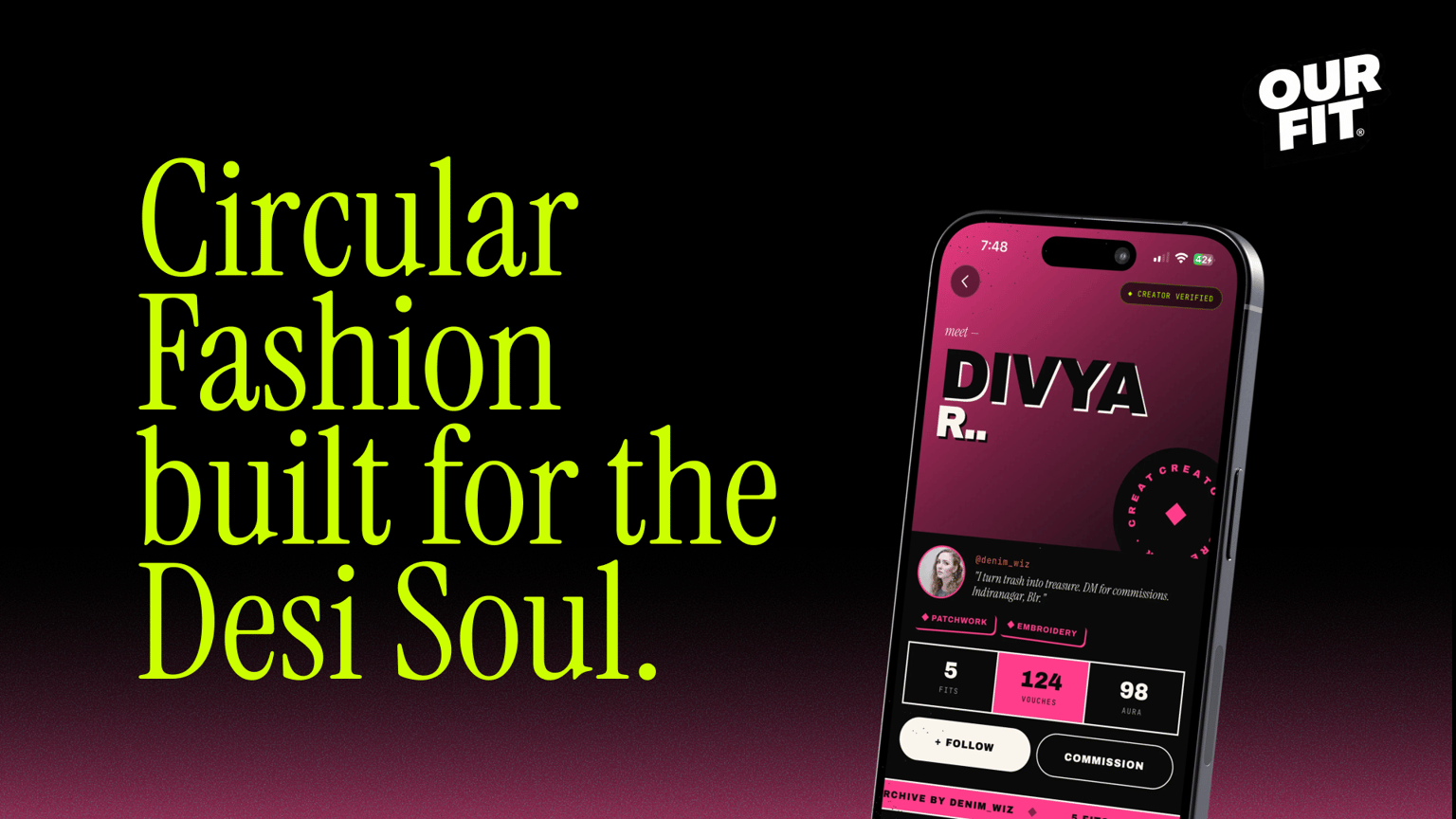
The MVP is up and you can use all of it. The next two columns are what I'd build if this became a real thing rather than a college project, and I've been fairly honest about which is which.
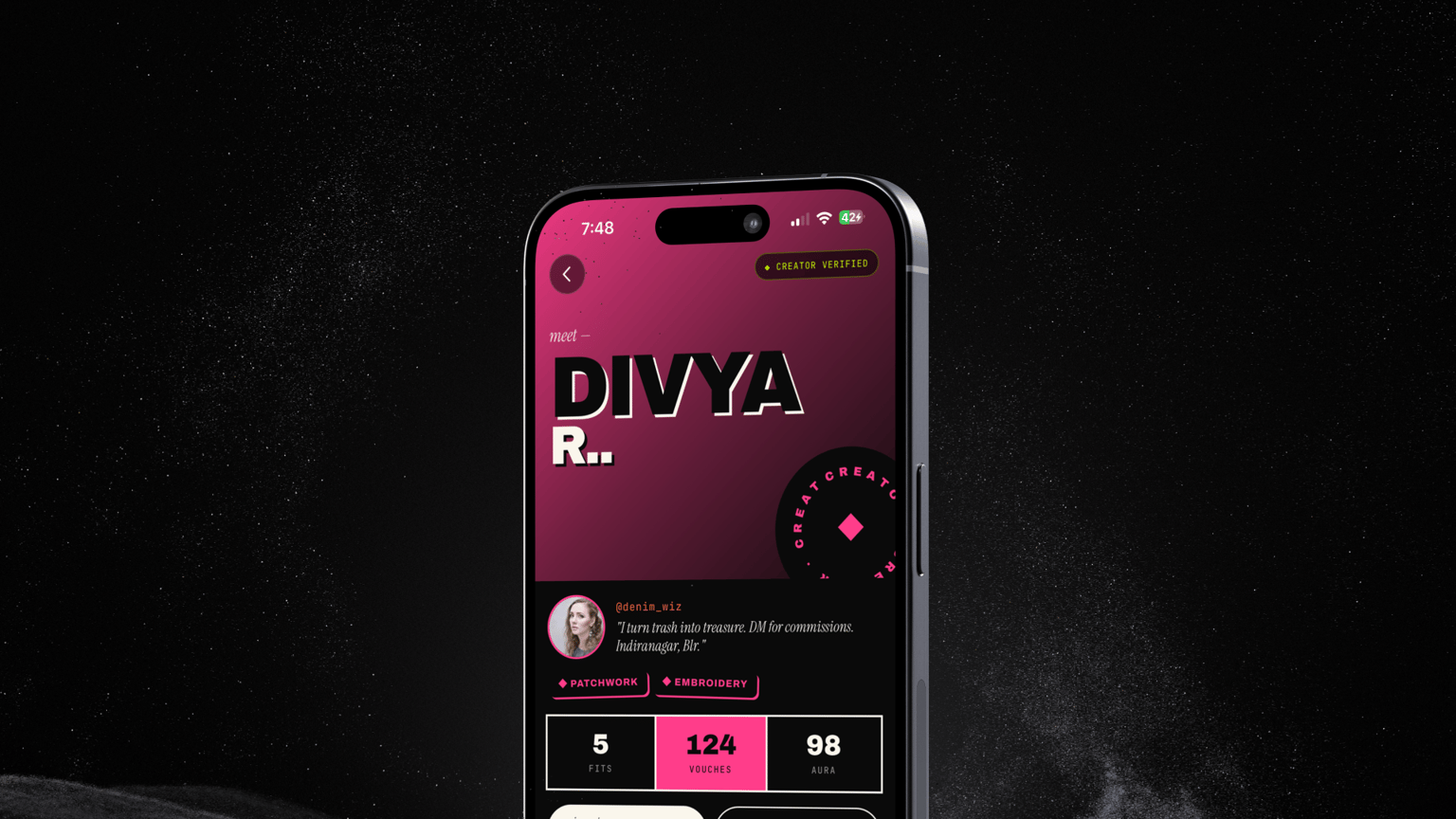
The MVP, deployed
- Brutalist feed with AI-curated archive listings
- Haggle cards: accept, decline, counter
- Thrifty Flip: seller → artist → buyer in one thread
- Vouch & Aura trust economy
- Installable PWA, works offline-first
Monetise the flip
- A lean take rate on sales, kept deliberately low
- Flip fee on every artist commission
- UPI-native payments and doorstep pickup
Own the culture
- Creator boosts and profile subscriptions
- AR try-ons and generated model imagery at scale
- City drops — BLR → Delhi → Mumbai
Got something you want built like this? Talk to me.